An early hint on spring provided an opportunity to get out and see a pair of art installations in NYC. Both transform gallery interior spaces in different ways. They’re a reminder that the simple application of reflection and light can result in complex distortions and kinetic patterns.
Photos and Text: Dave Pinter
Additional Descriptions: SWPK, Lisson
Anne Katrine Senstad – Baroque Apocalypse
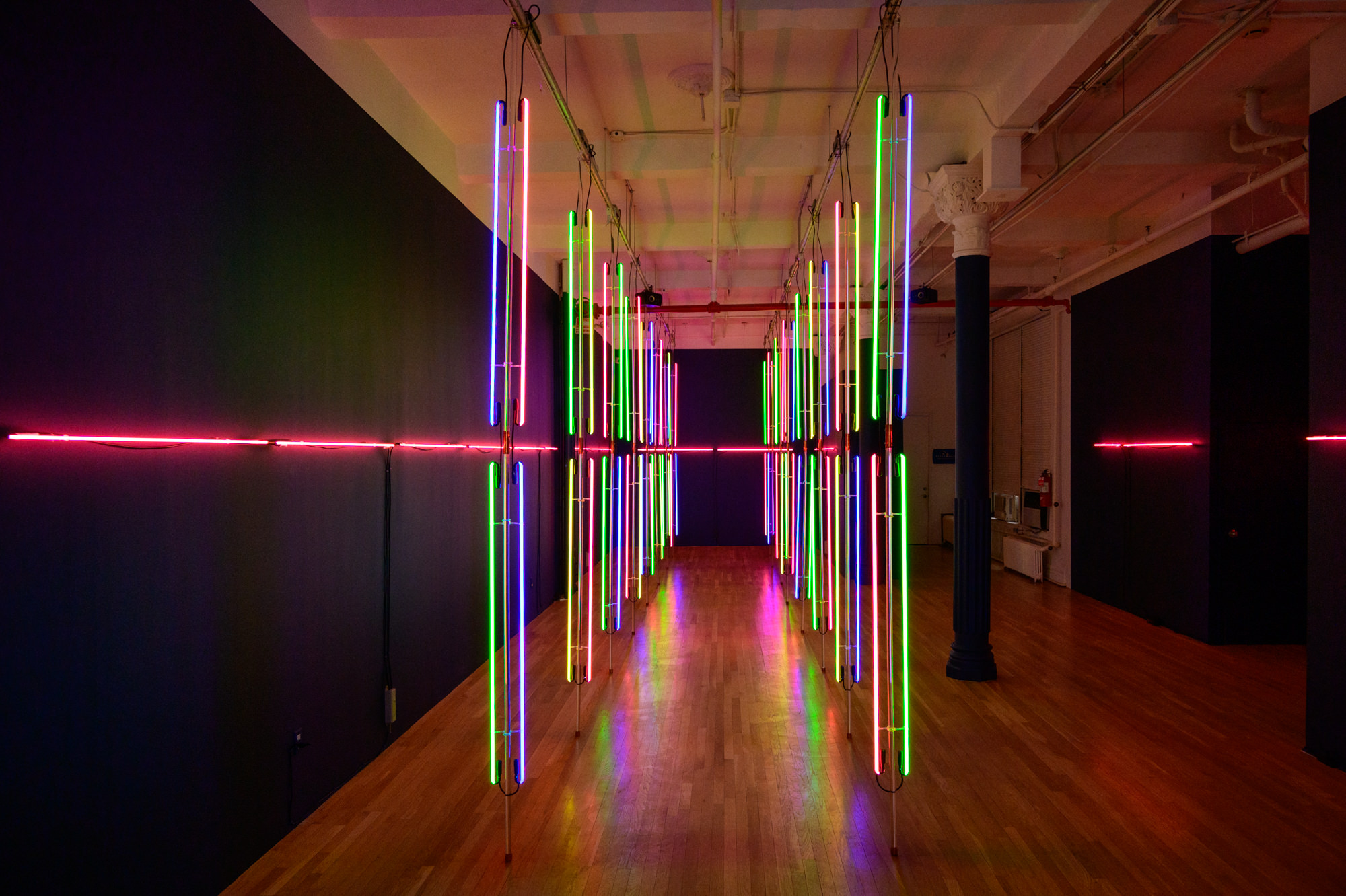
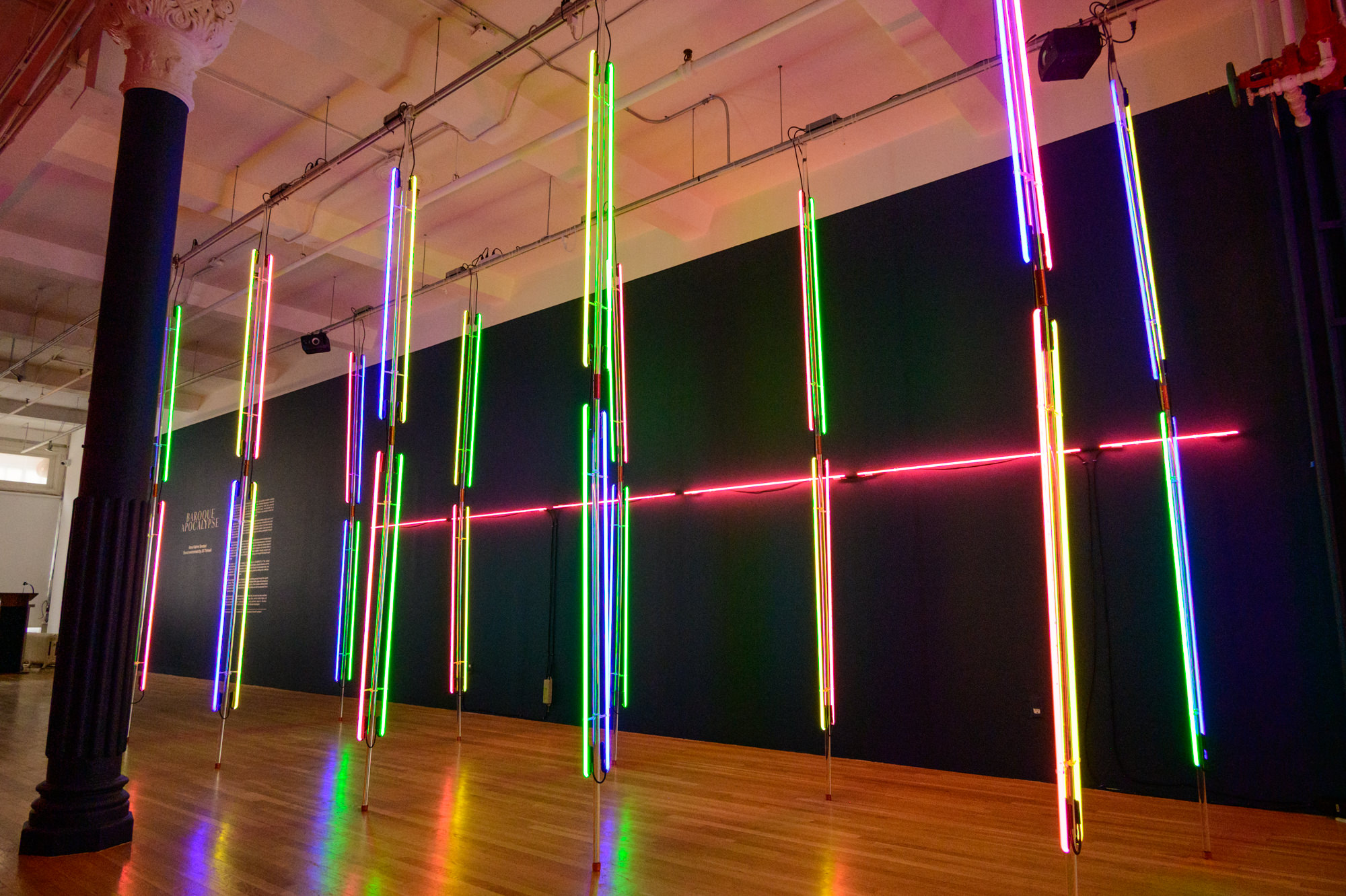
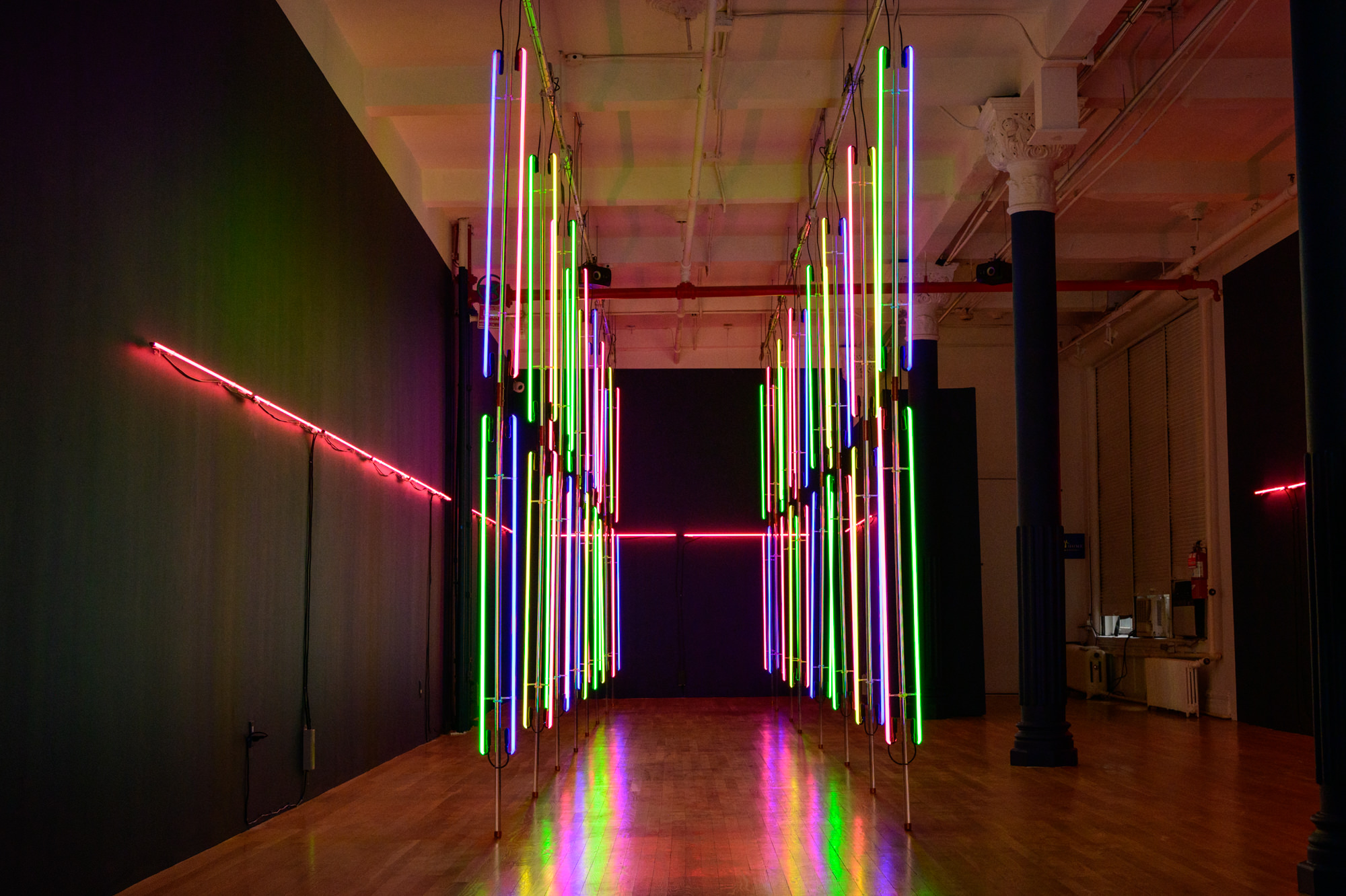
Baroque Apocalypse is the ninth iteration of Senstad’s ELEMENTS installation series started in 2018. For the exhibition at the Sylvia Wald and Po Kim Gallery (SWPK) the physical work was paired with a commissioned sound environment by JG Thirwell. I’ve been a long time fan of Thirwell since his early 90s era Foetus albums. What I heard of the piece was fairly spare and experimental.
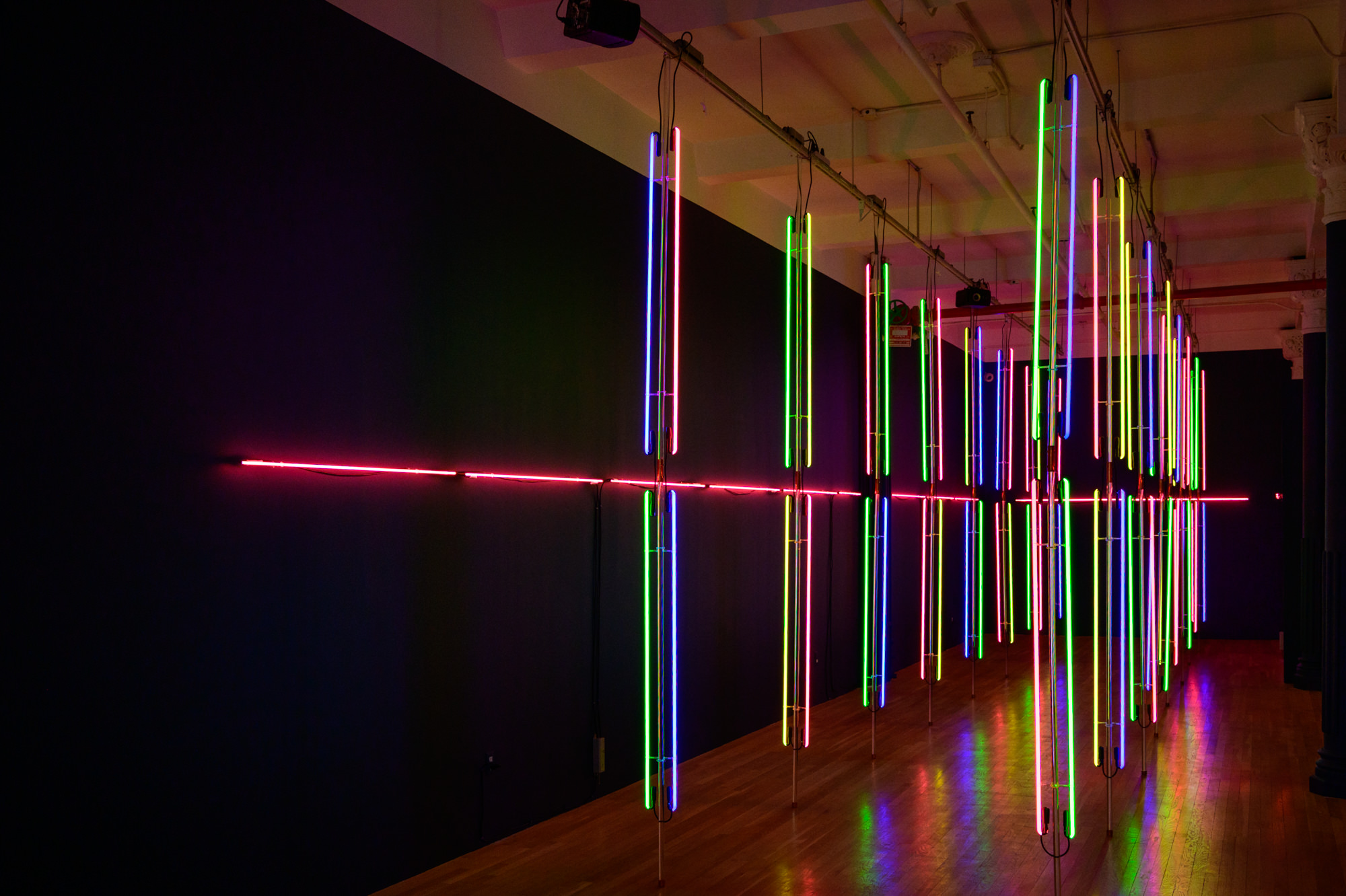
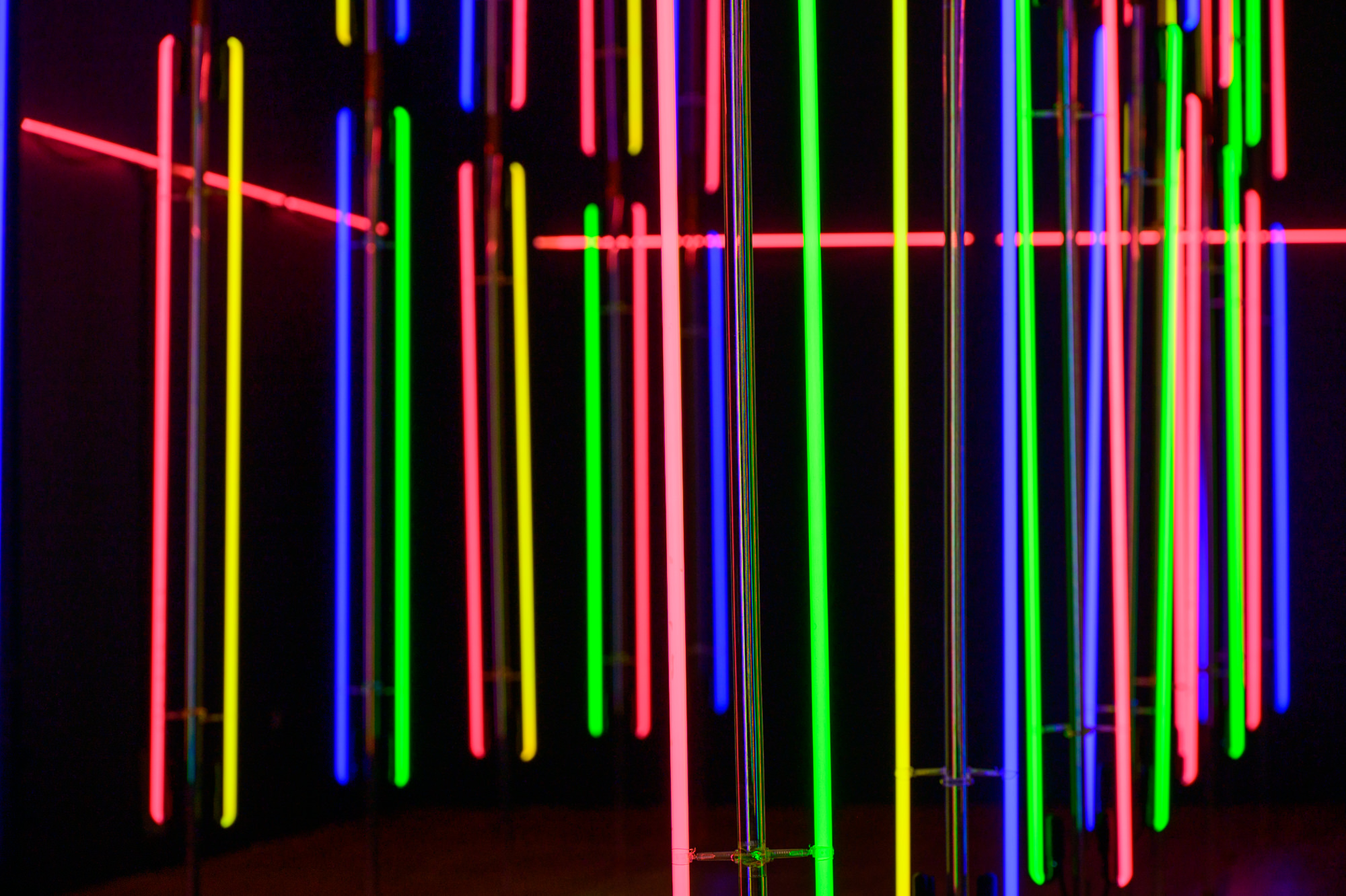
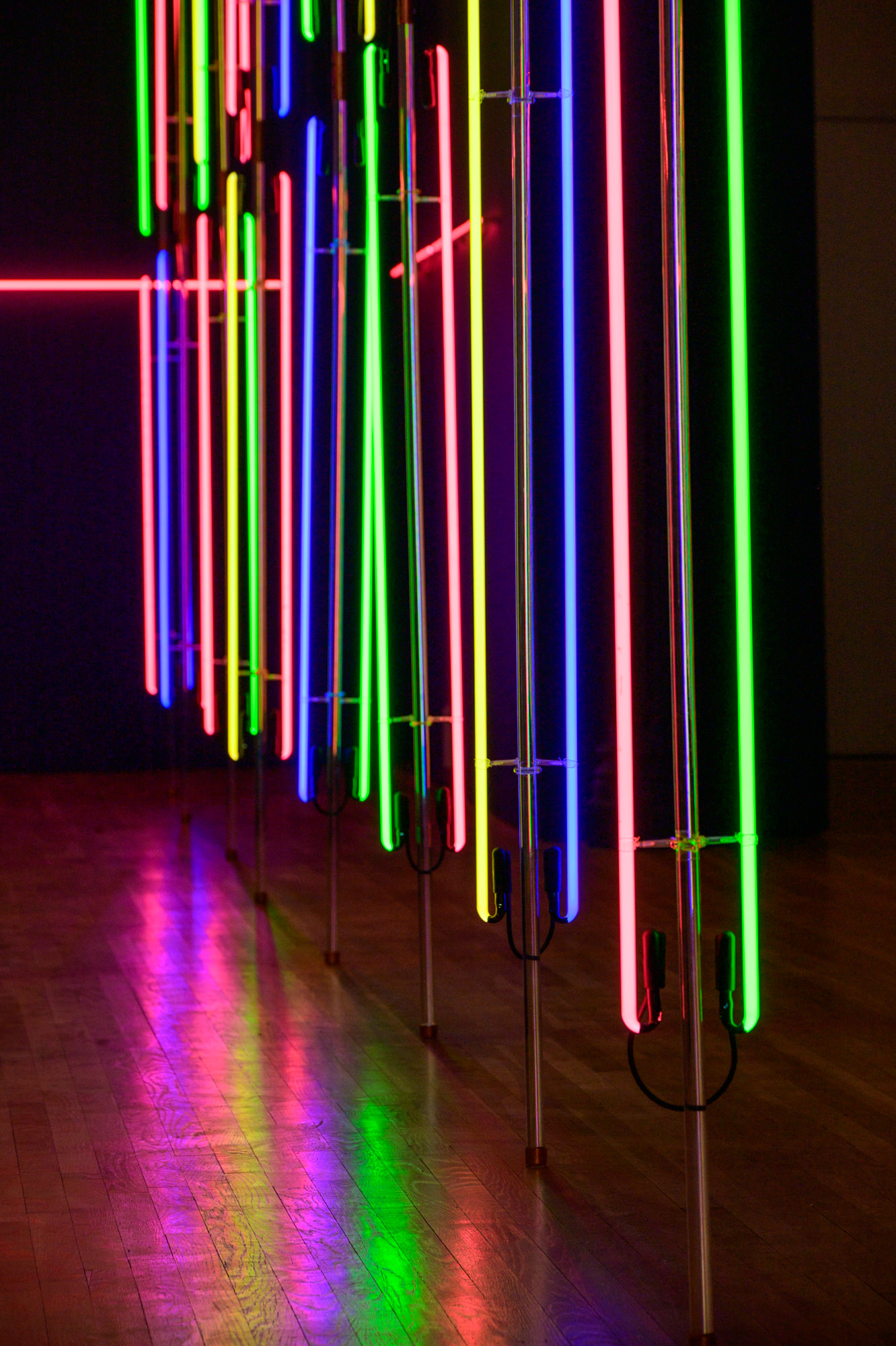
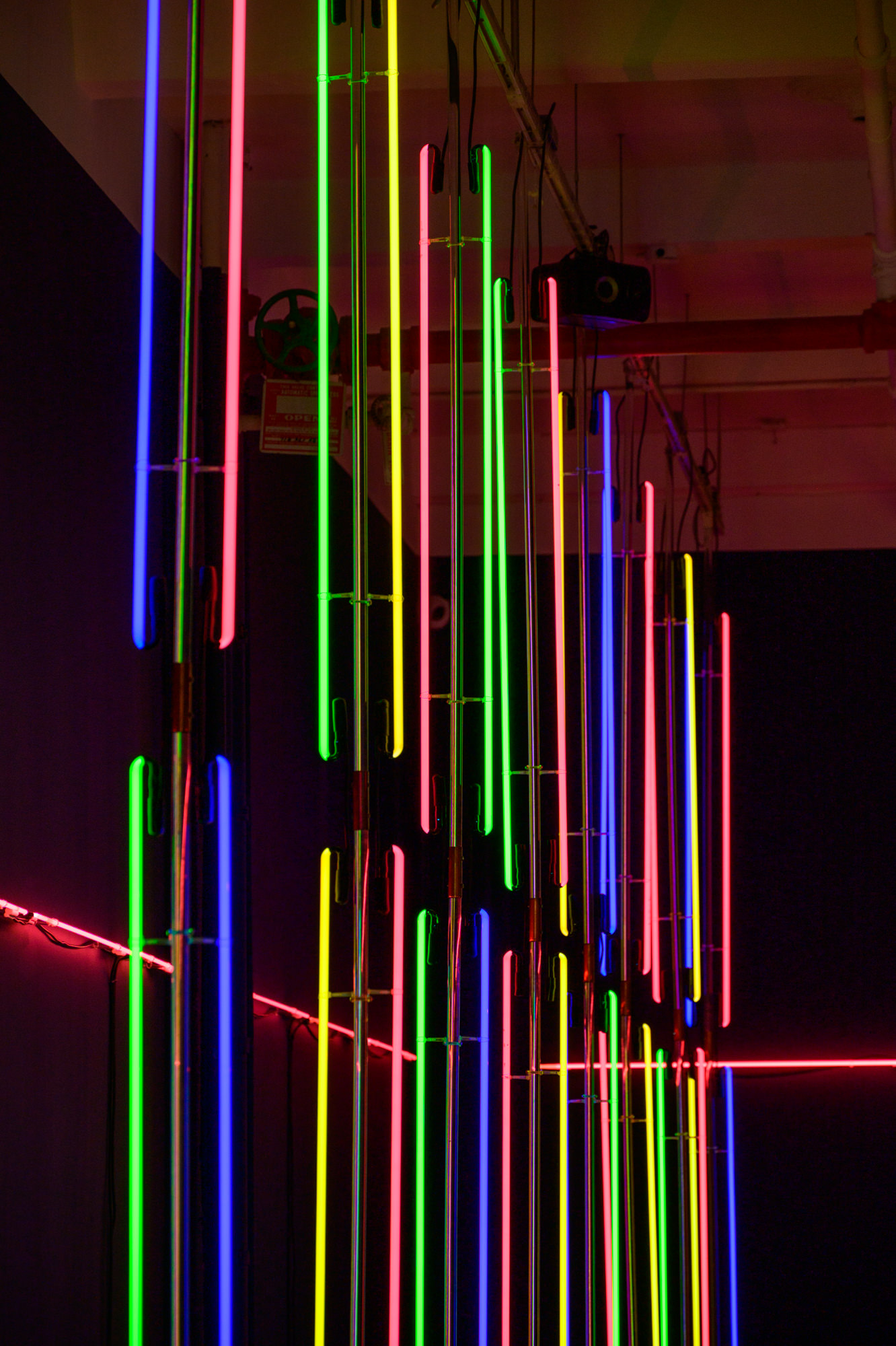
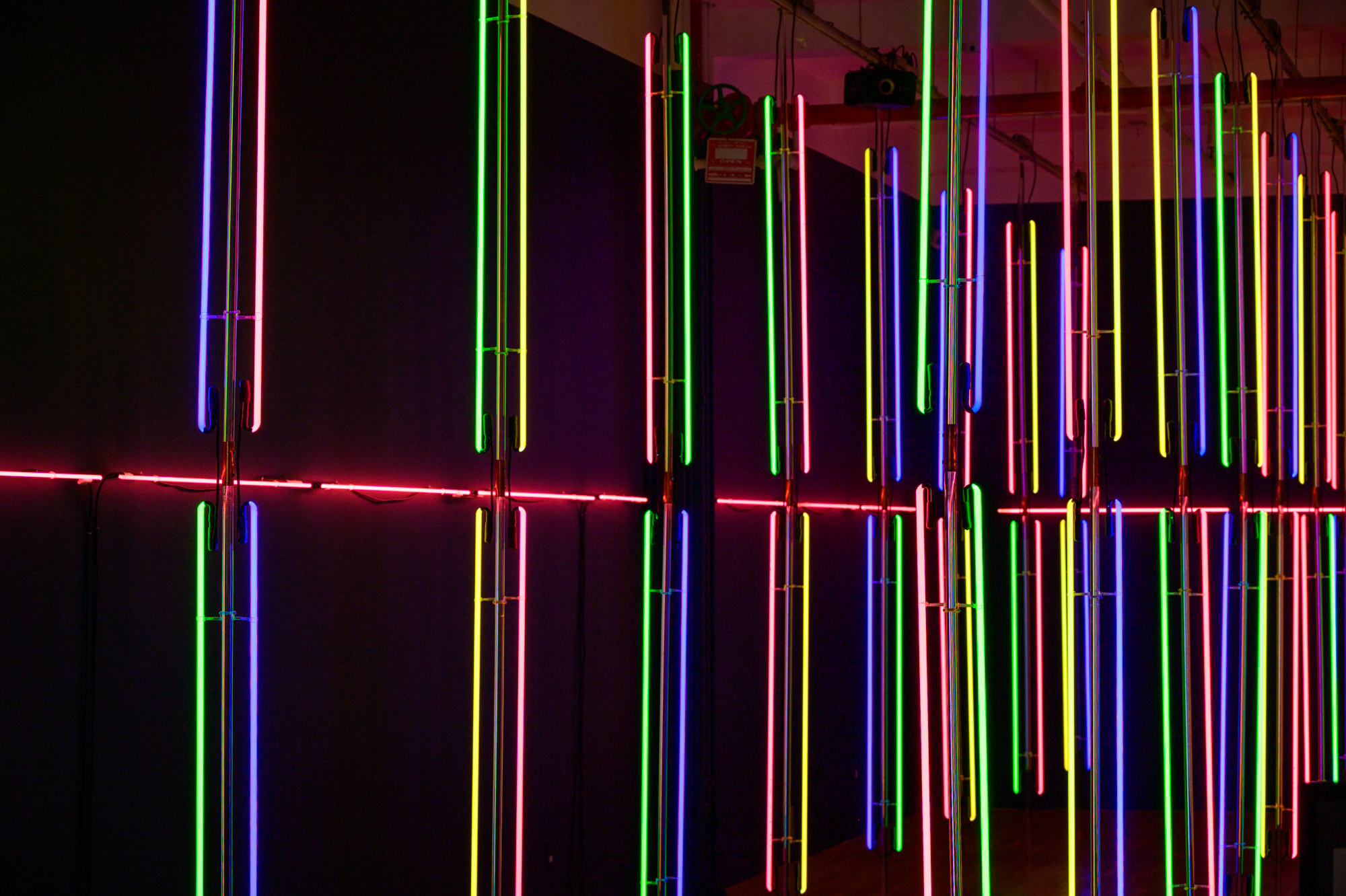
ELEMENTS IX is composed of neon tubes that form a colonnade referencing the Hall of Mirrors at the Palace of Versailles. The columns in the gallery space are bisected by a line of red neon tubes placed at about eye level. This creates a horizontal symmetry effect when viewed at certain angles and amplifies the sense of perspective.
The way the tubes appear to float also distorts their connection to physical space which contrasts to Dan Flavin’s use of color light as being more structurally connected to the fixtures generating it.
Full Description
Anne Katrine Senstad works at the intersection of light, sound, and spatial perception, creating environments that transform architecture into sensory experience. Baroque Apocalypse marks the foundation’s first solo exhibition with the Norwegian interdisciplinary artist and presents ELEMENTS IX, the ninth iteration in her ongoing ELEMENTS series. Accompanied by a four-channel sound environment by acclaimed composer JG Thirlwell, the exhibition invites the viewer into a space shaped by color, luminosity, and resonance.
Senstad’s practice moves beyond spectacle to engage the ephemeral qualities of light, sound, and time. In Baroque Apocalypse, vertical columns form a luminous colonnade animated by noble gases including argon, neon, krypton, xenon, and helium. Each gas produces a distinct chromatic intensity, from royal rose pink and cobalt blue to emerald green and Apollo’s yellow. Color becomes an active presence within the installation, surrounding the viewer and altering perception through movement and proximity.
The scientific phenomenon of sonoluminescence invokes transformative notions of poiesis, where creation brings forth the sublime and the unknown. In states of sonoluminescence, microscopic gas bubbles suspended in liquid are driven into violent implosive collapse by intense acoustic fields, producing a glorious, luminous emission. This moment of implosion and release offers a potent metaphor for transformation. Light and sound emerge together through pressure and intensity, echoing cosmological events in which matter and energy are brought into being through radical change.
Architecture plays a vital role in shaping the experience of ELEMENTS IX. The vertical configuration recalls ceremonial colonnades found in ancient temples, cathedral interiors, and the Hall of Mirrors at the Palace of Versailles. As visitors move through the illuminated field, time appears suspended. The act of walking becomes participatory, guided by shifting color, reflection, and the enveloping presence of sound.
Conceived as a durational installation, Baroque Apocalypse unfolds gradually through the organic behavior of neon. Though light appears immaterial, it is contained within glass and activated by electrical current. The result is a tension between solidity and flux. Neon radiates continuity while resisting fixed form, offering a perceptual encounter with the infinite and with the elemental forces that shape human experience.
Anish Kapoor
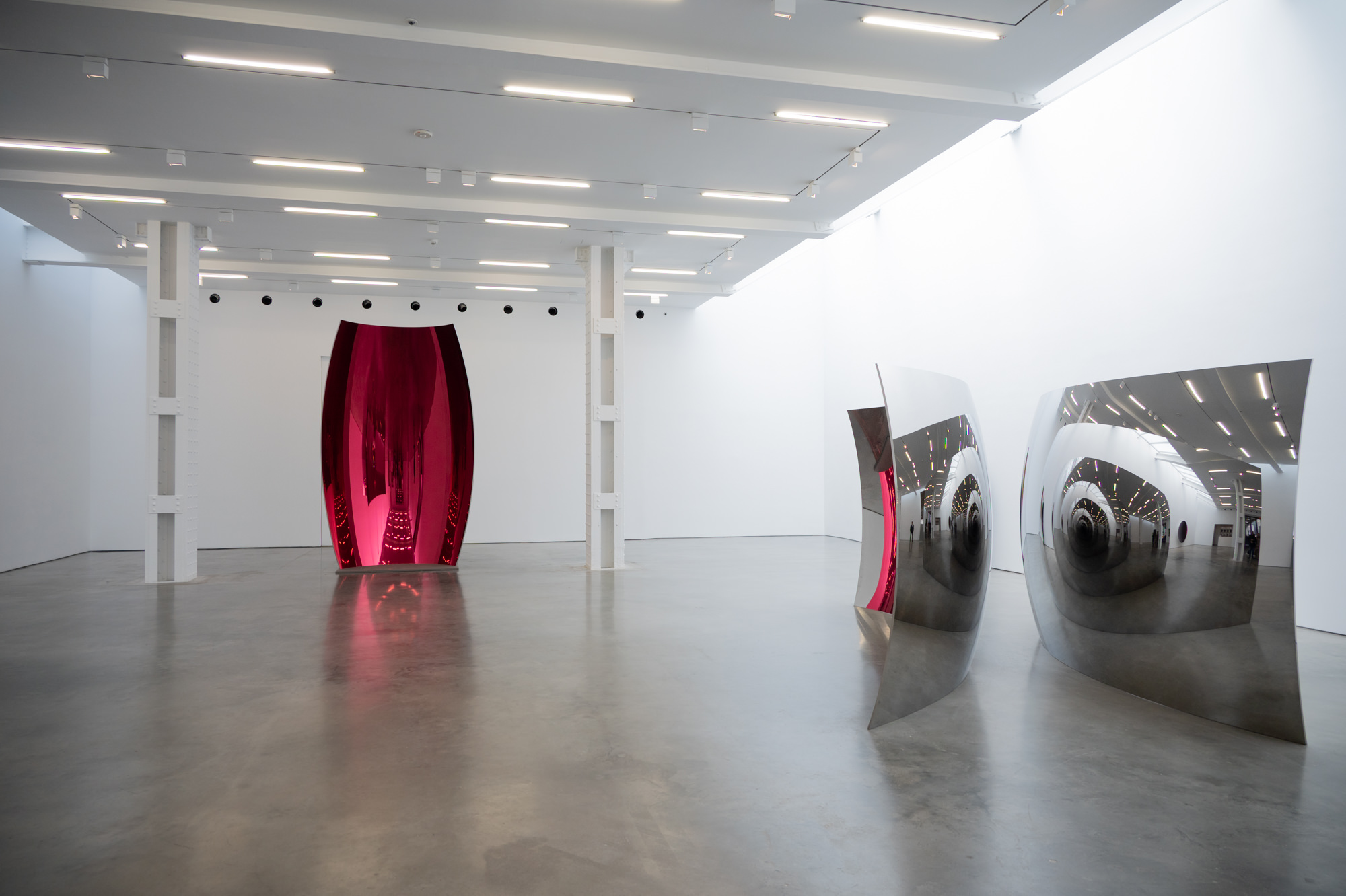
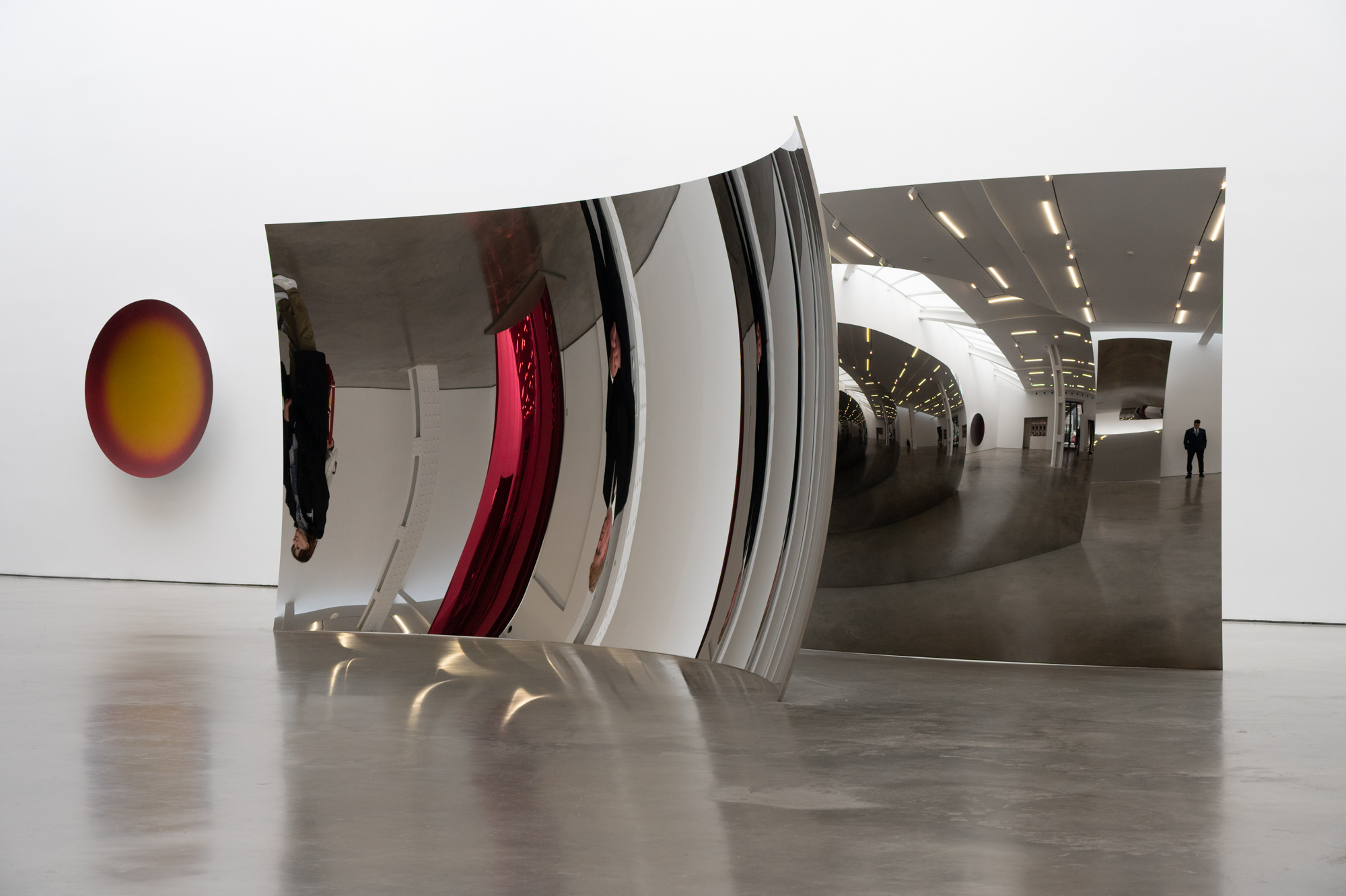
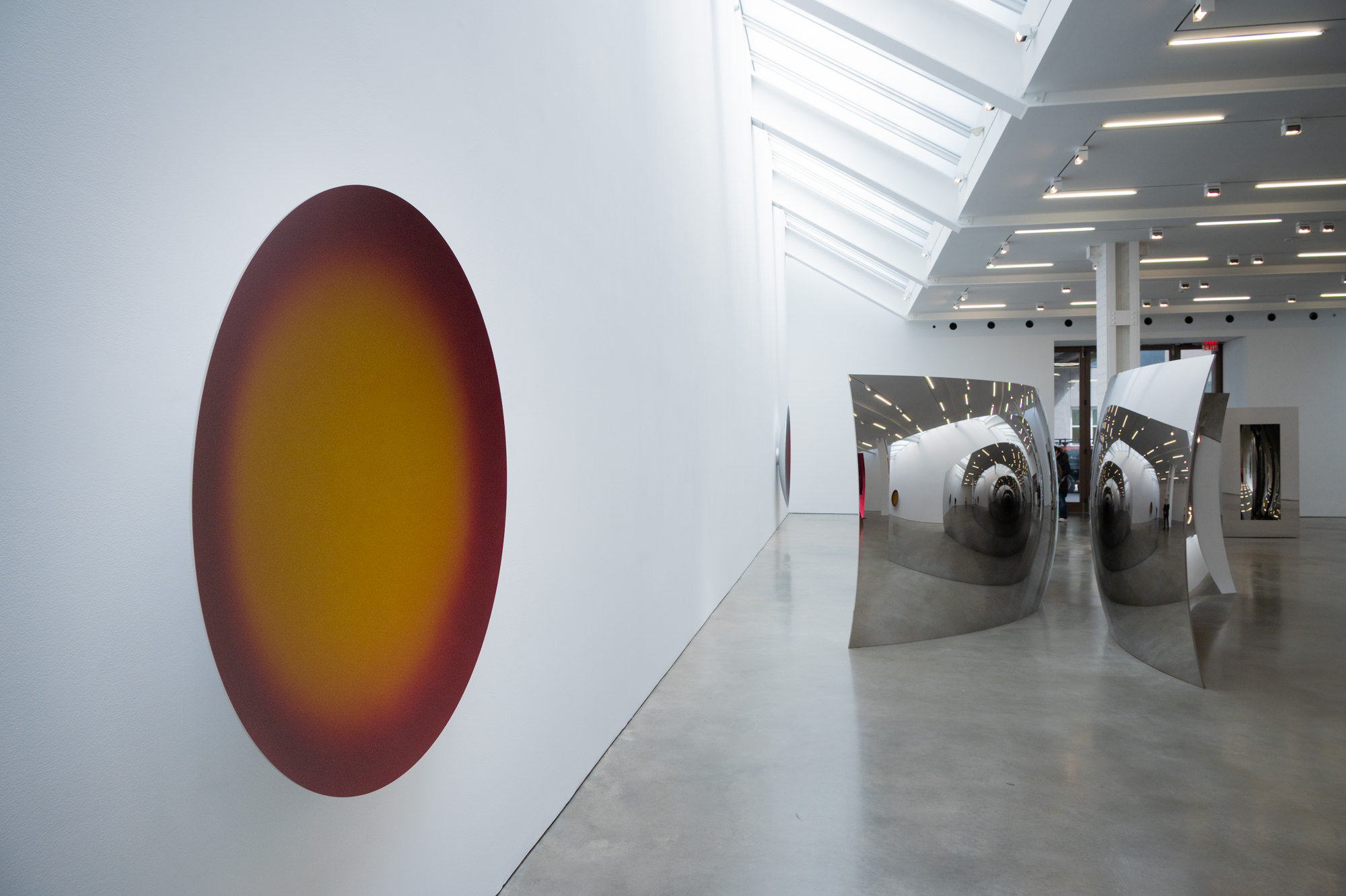
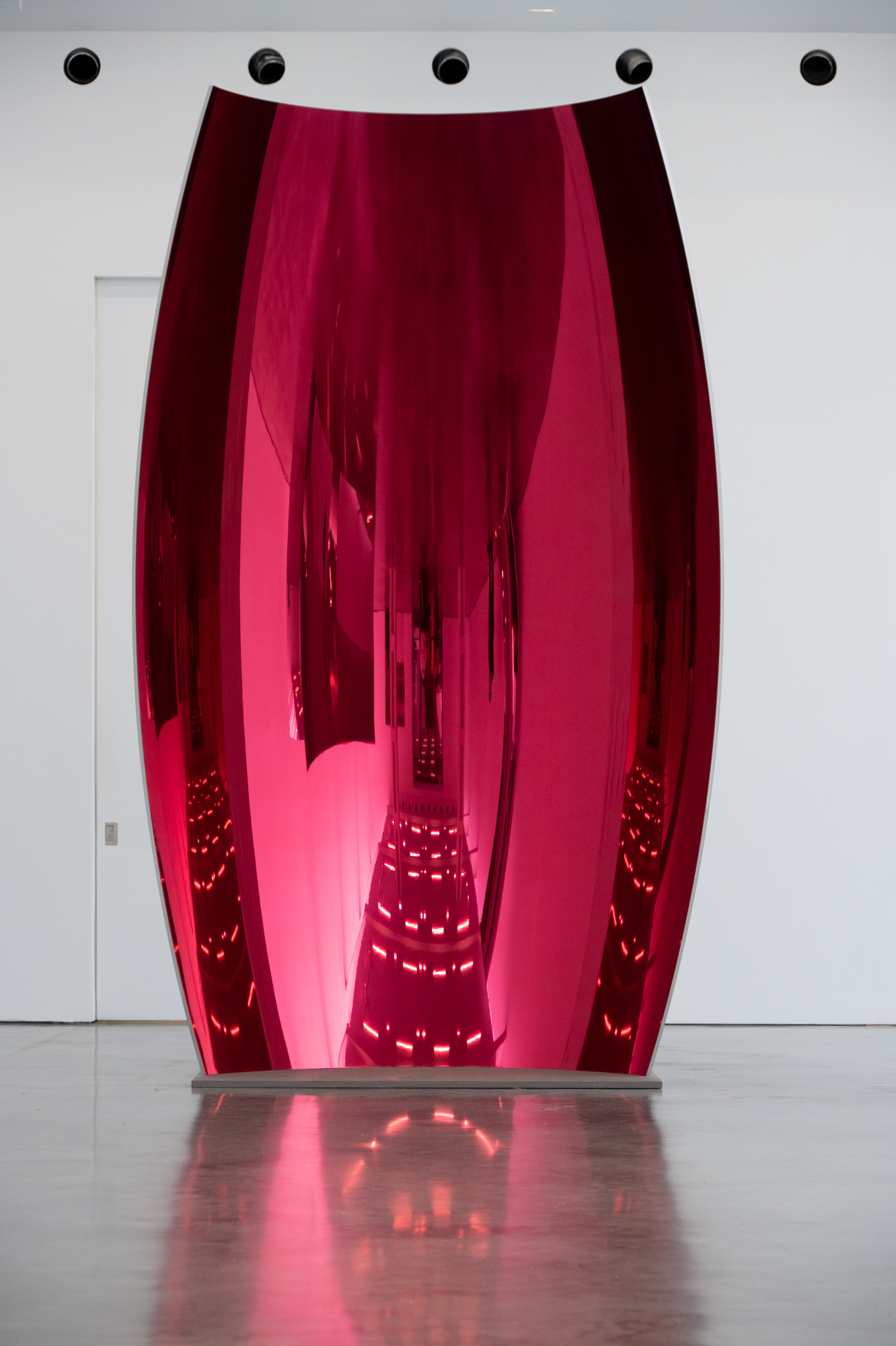
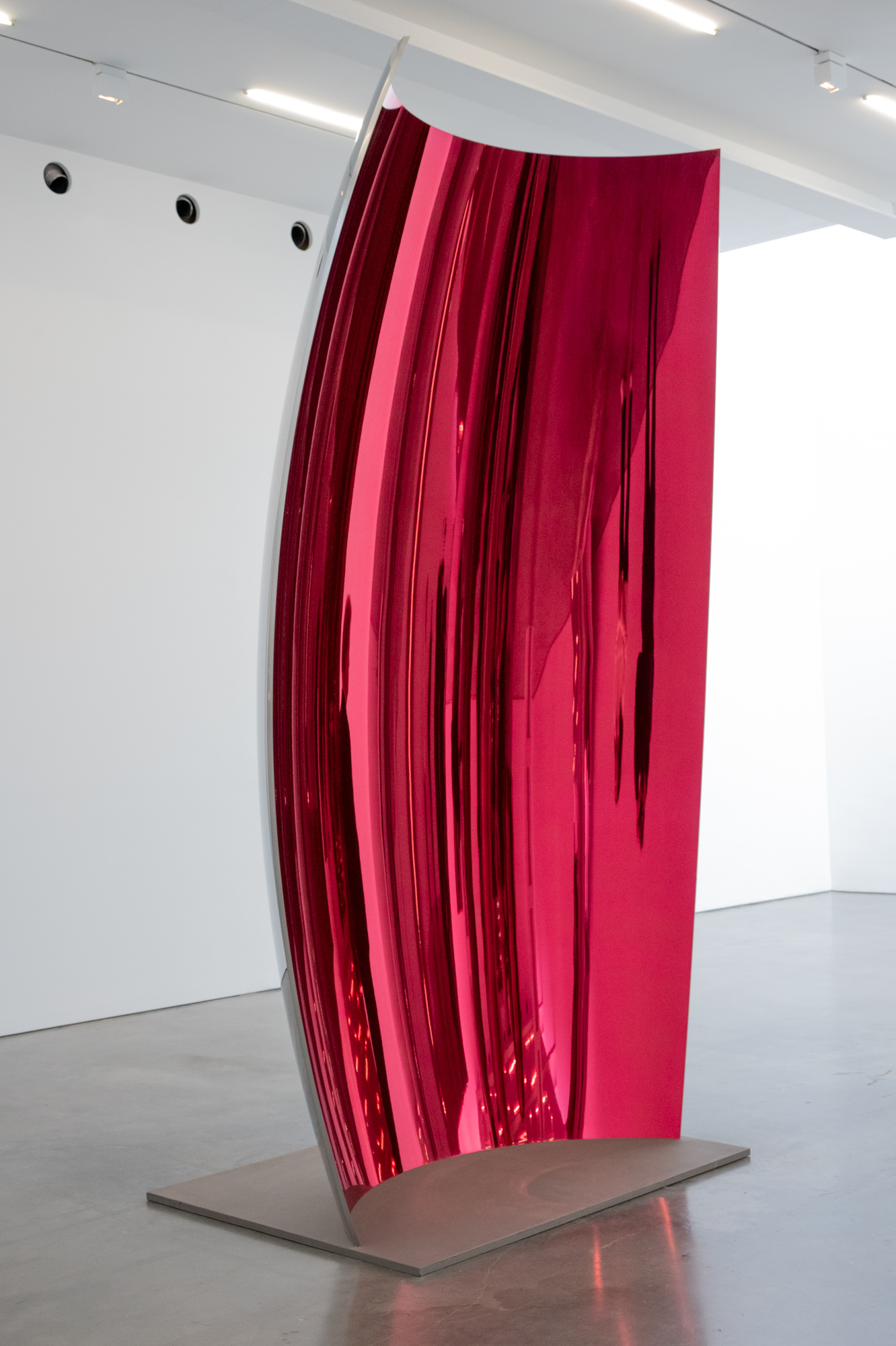
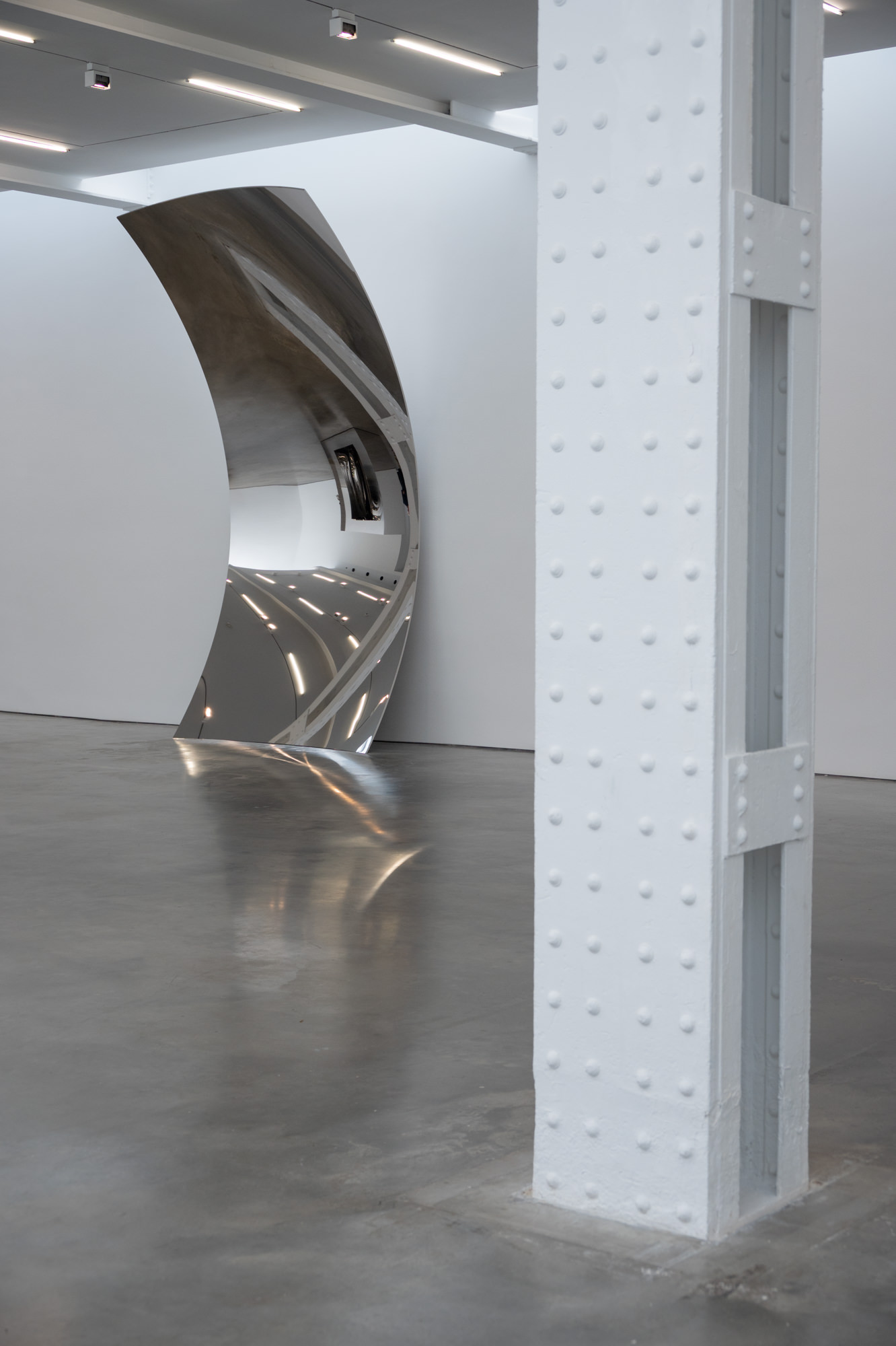
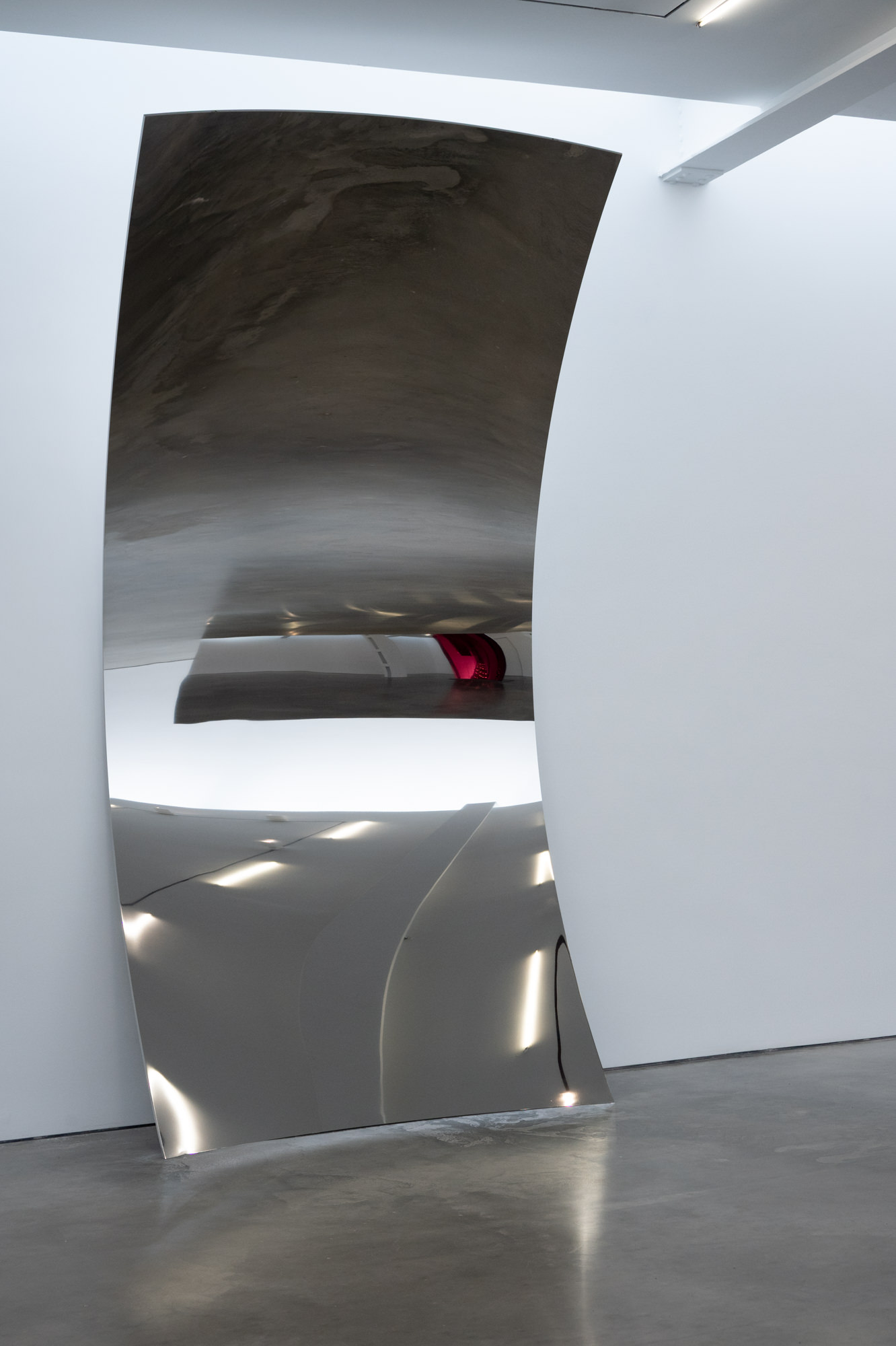
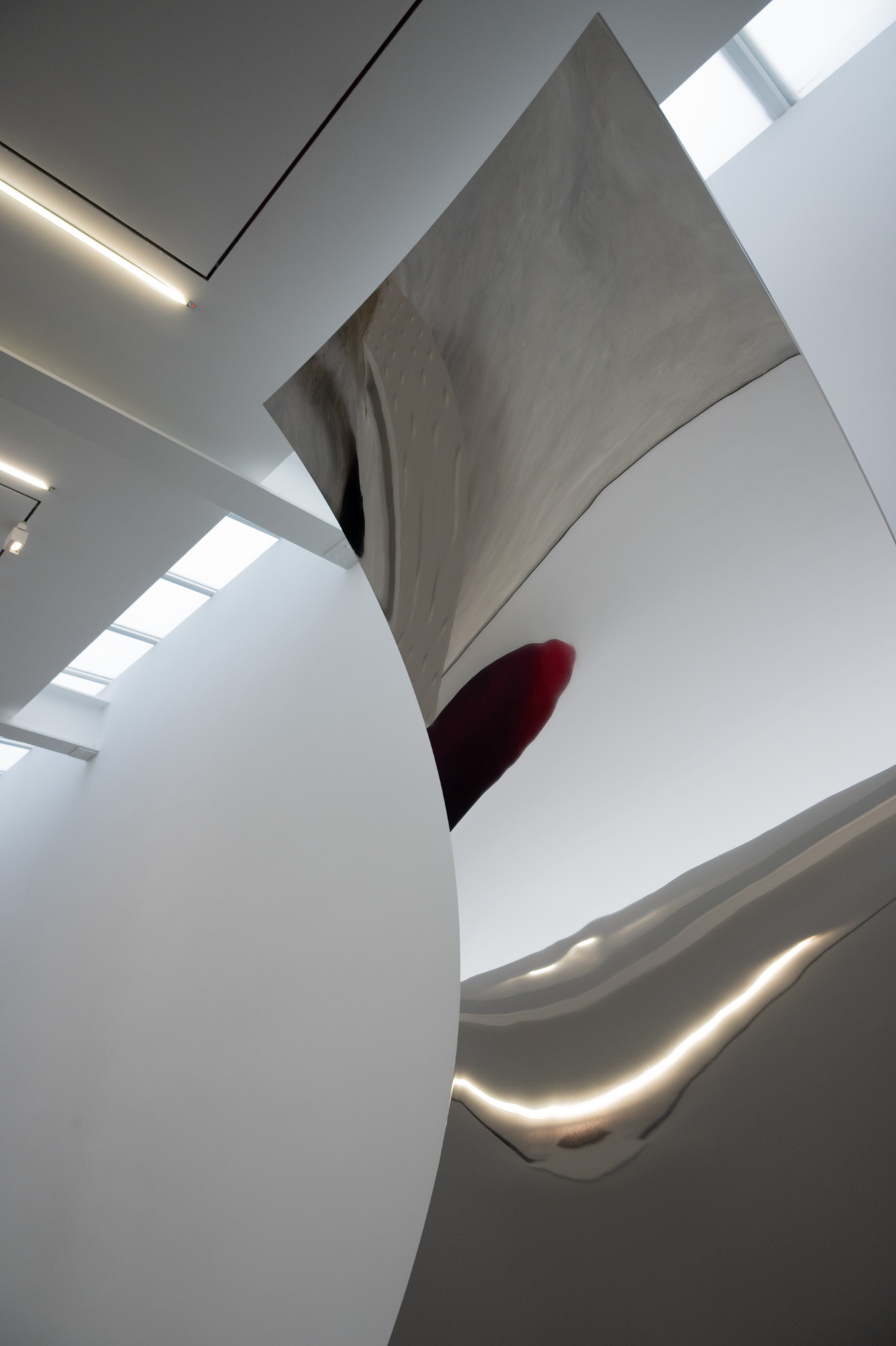
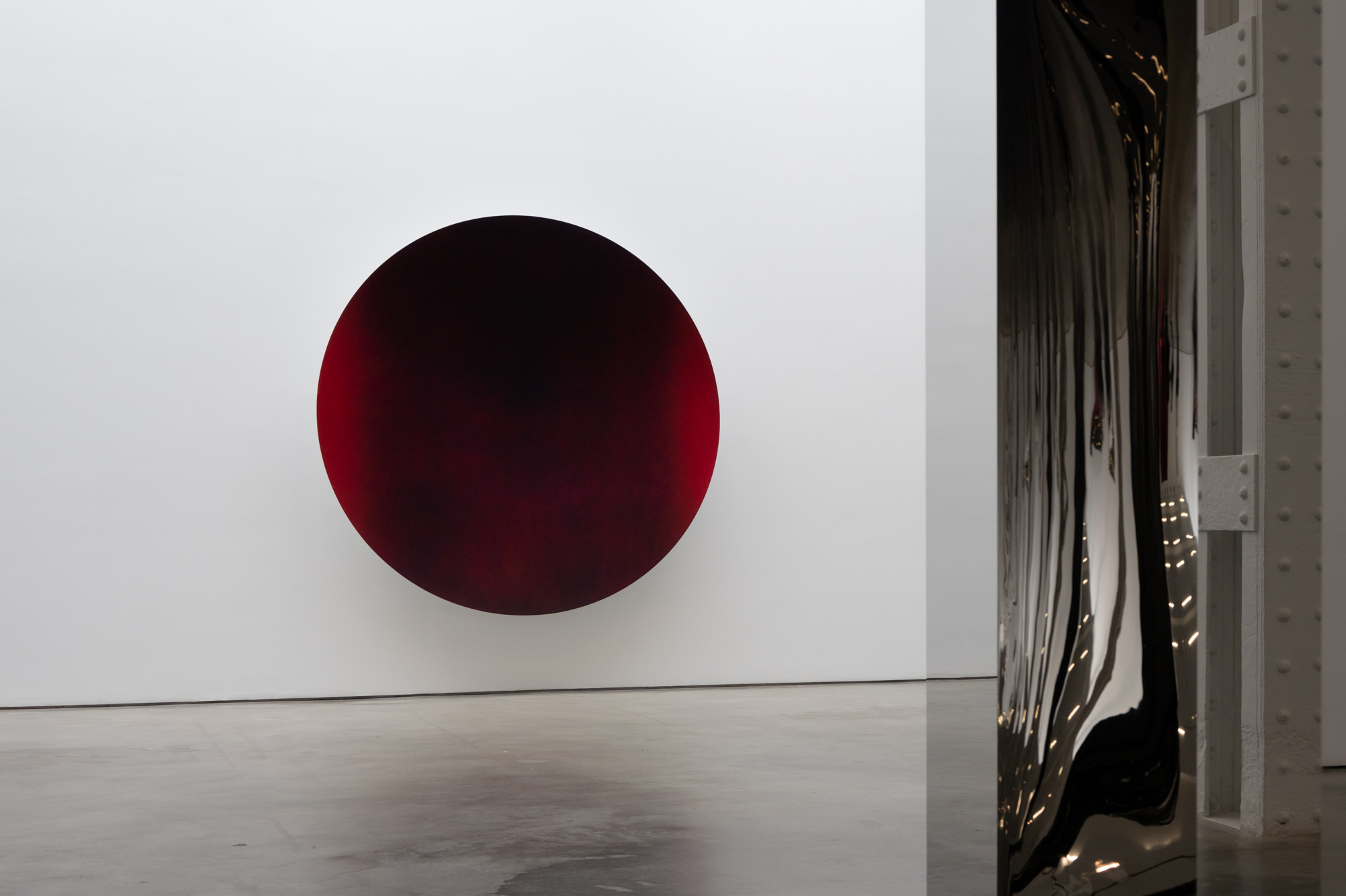
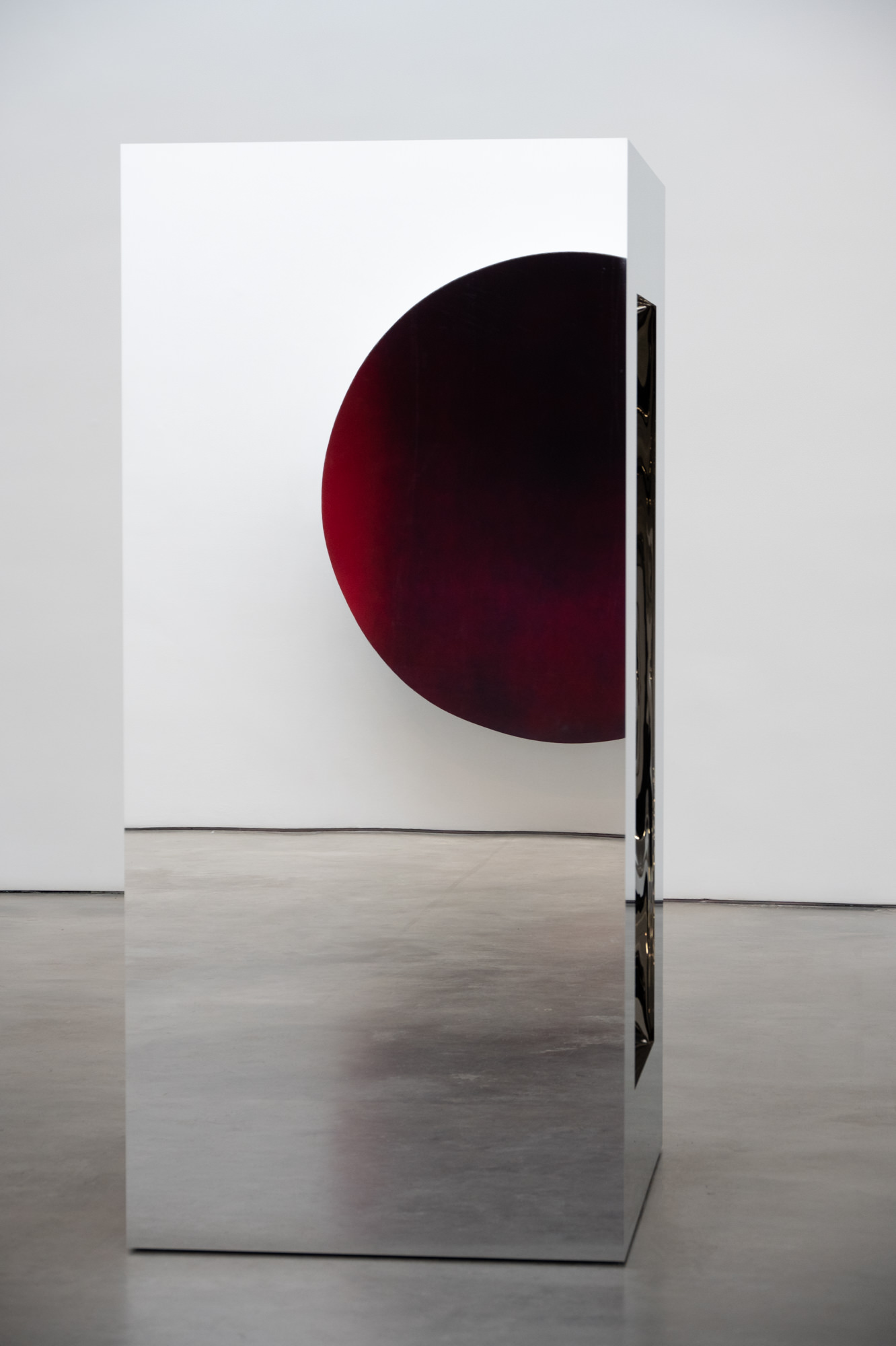
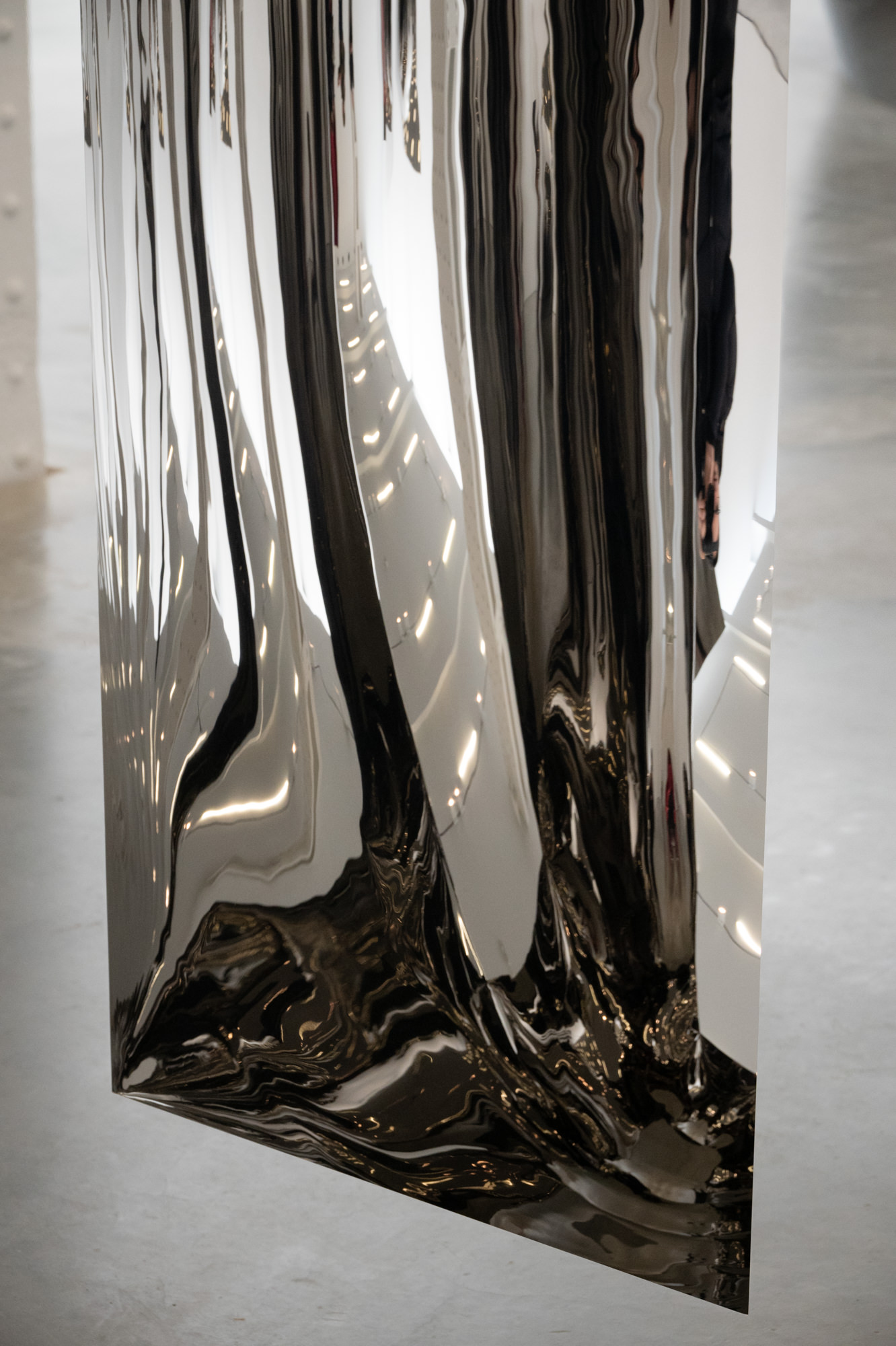
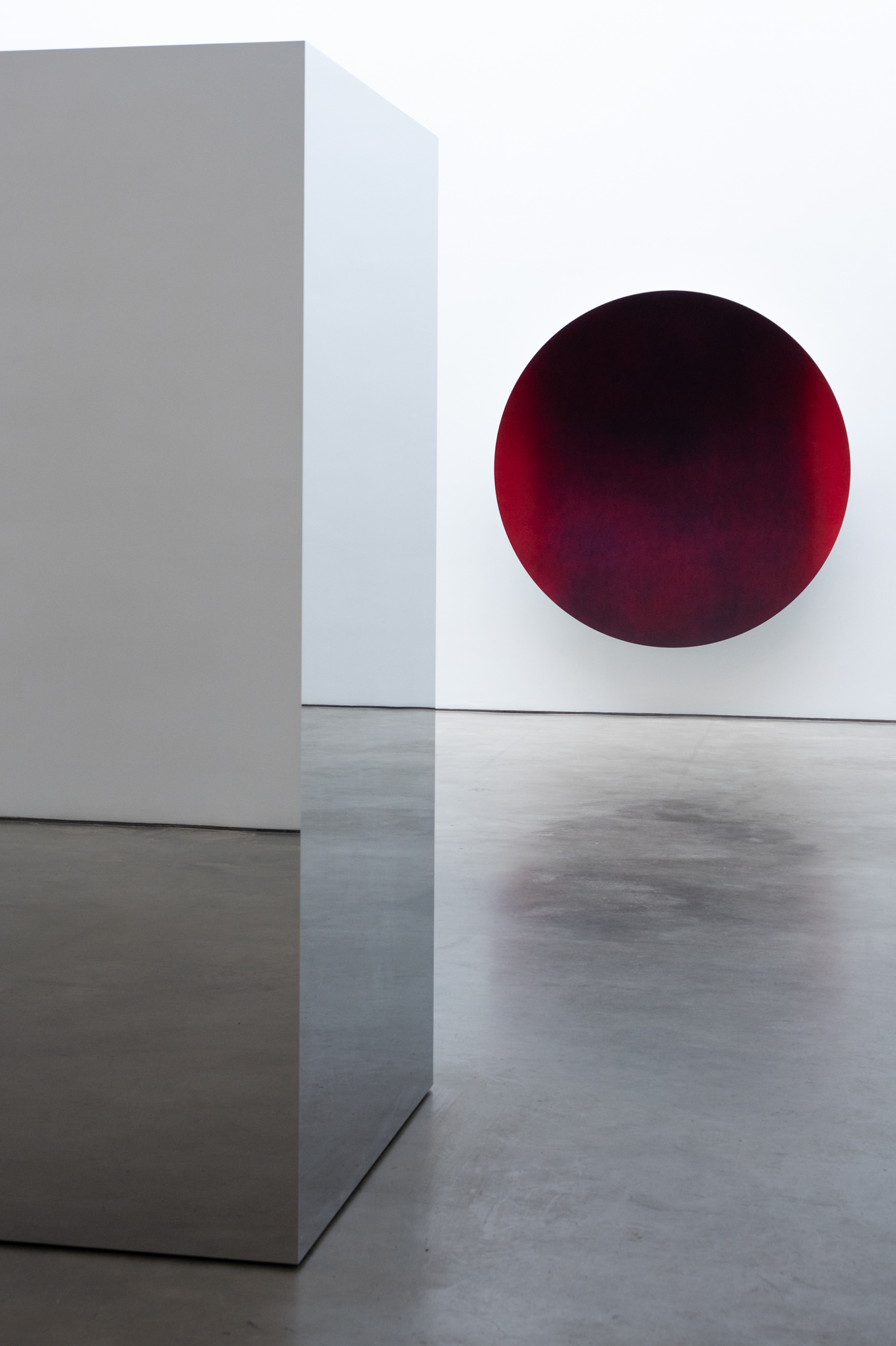
A collection of a half dozen mirror works by Anish Kapoor from 2010 to 2026 made up an exhibition at Lisson Gallery in Chelsea. Collectively, this group of highly polished monumental sculptures offered some truly reality bending reflected views.
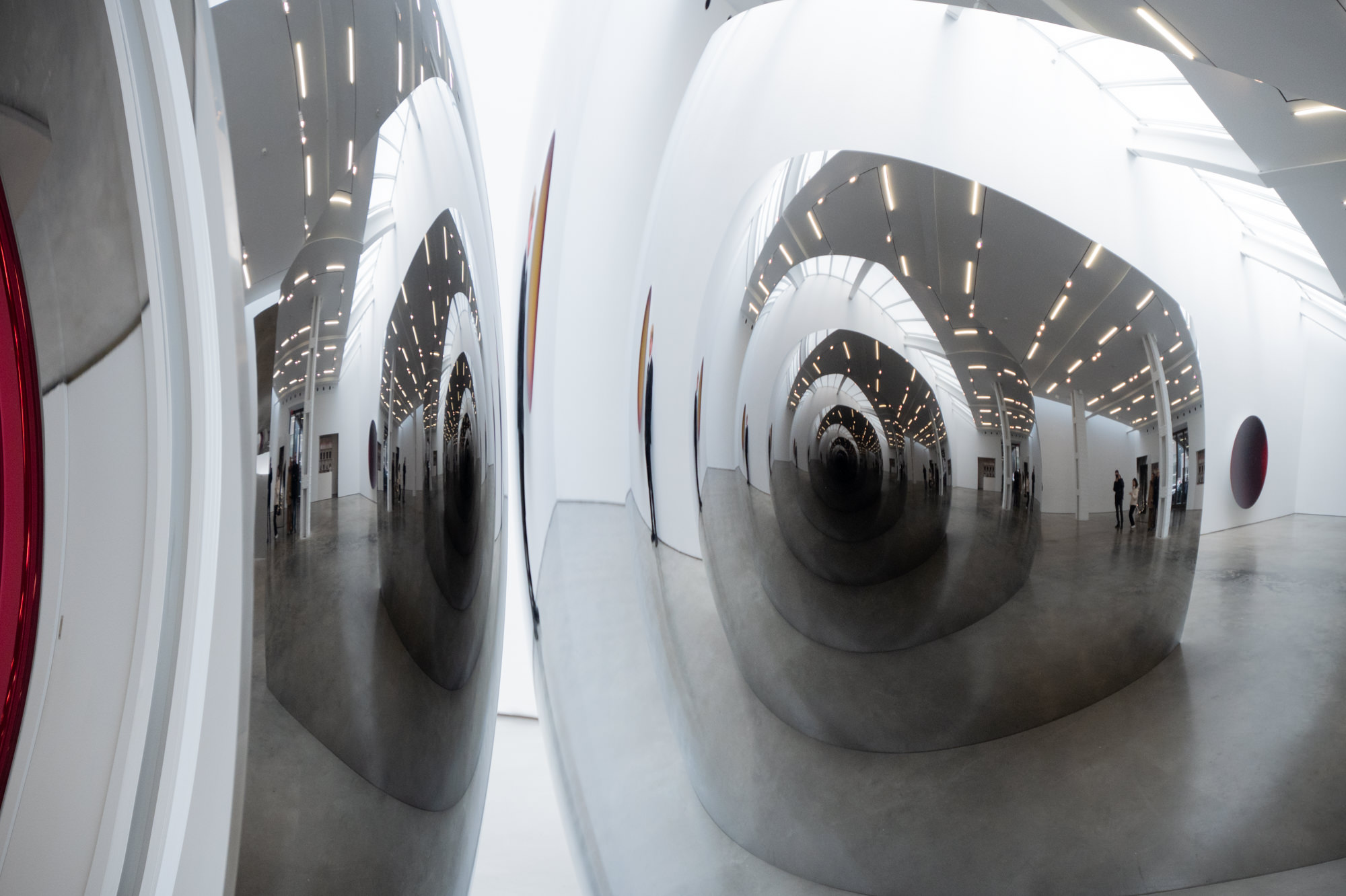
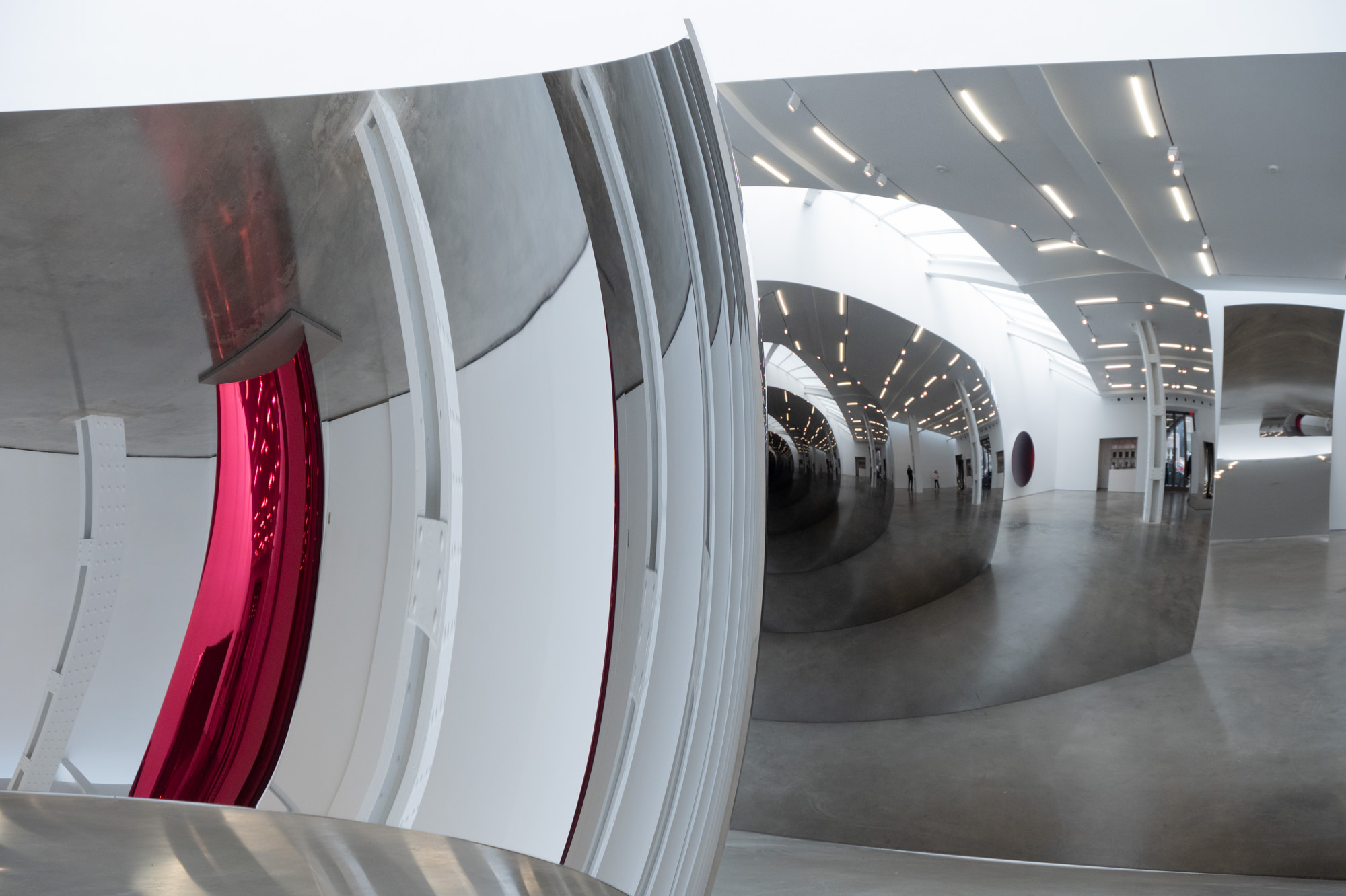
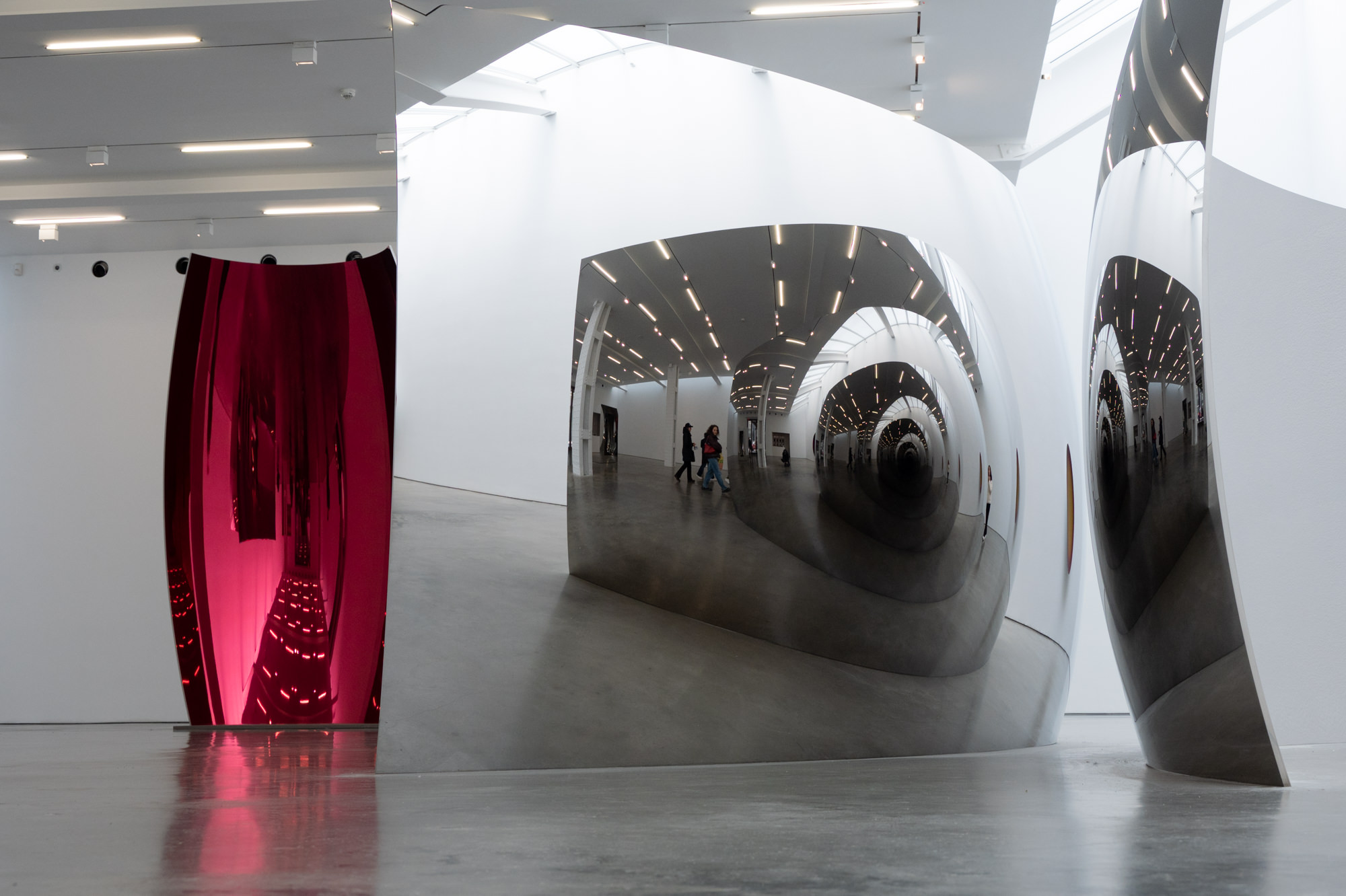
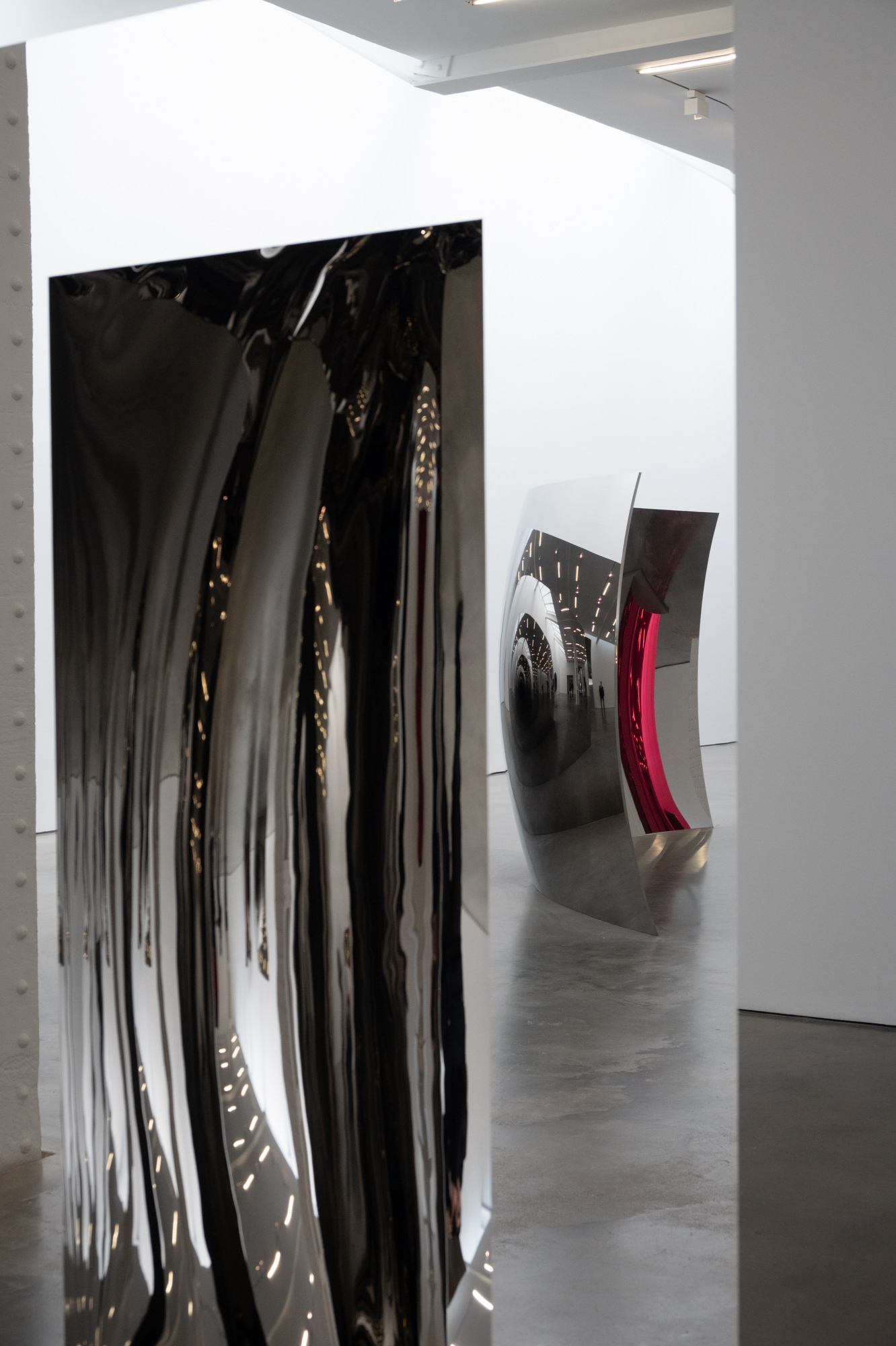
The aptly named Double Vertigo (2012) offered the most extreme distortions. The pair of human height curved panels of mirror steel offered highly magnified reflections on the concave outer sides and wild fish-eye views from the inward facing convex surfaces.
The forms Kapoor chose for these works are all very pure, the magic and chaos occur in the reflections. Seeing them in person is experiencing how these reflections compress and stretch as you move around. Things get really weird when multiple pieces reflect into each other. It was hard not to slip into feeling like this was an elevated fun house.
Full Description
Anish Kapoor’s groundbreaking explorations of scale, color, volume, and materiality unfold through a focused presentation of mirror works created between 2010 and the present. Building on the artist’s enduring investigation of spatial illusion, these sculptures challenge viewers to experience their de-stabilized presence within reflective and immersive environments. Monumental stainless-steel forms anchor the exhibition, accompanied by a select group of
painted mirrors that oscillate between stillness and transformation. The exhibition directly follows Kapoor’s major museum presentation at the Jewish Museum in New York, and coincides with his first US institutional exhibition
dedicated exclusively to painting at the SCAD Museum of Art (opening February 9, 2026). Preceding a landmark exhibition at Southbank Centre’s Hayward Gallery, and an ambitious presentation at Kapoor’s foundation, Palazzo Manfrin, this summer, this exhibition offers a timely opportunity to encounter new iterations in one of Kapoor’s most influential bodies of work.
For over four decades, Kapoor has consistently explored new ways of thinking about form, material, and spatial experience. His practice resists purely optical engagement, instead situating the viewer within a phenomenological field
where perception is unstable and meaning emerges through embodied encounter. Sculpture, for Kapoor, is not a fixed entity but a condition, an event that unfolds in relation to the human body, the surrounding architecture, and the mutable effects of light.
The presentation in New York brings together a group of stainless-steel works that exemplify this approach. In Non Object (Plane) (2010), a single folded sheet of highly polished stainless steel leans against the wall, seemingly
weightless. Its reflective surface produces an image that is continuously reconfigured by movement and proximity. The work operates in a liminal register, suspended between objecthood and immateriality, as reflections expand beyond the physical limits of the sculpture itself. Viewers encounter their own distorted image within an indeterminate spatial field,
prompting a heightened awareness of presence and scale.
Similarly, Double Vertigo (2012), in which paired concave forms generate a compounded optical effect that destabilizes orientation, creates a sense of inward pull, producing a subtle tension between attraction and disquiet. A recent large-scale sculpture, Untitled (2023), presents a stainless-steel cuboid structured around a central void. Rather than absorbing light in the manner of Kapoor’s pigment voids, the interior reflects it, transforming absence into an active visual condition. The work extends Kapoor’s sustained engagement with the void as a site of ambiguity and instability, where sensations of depth, containment, and loss of orientation converge.
In Stave (Red) (2015), Kapoor introduces a lacquered red surface to the polished steel, intensifying the sculptural presence of the work. Long associated with interiority and corporeality in the artist’s oeuvre, the color operates as both surface and spatial agent, inflecting reflection with emotional resonance.
Complementing these freestanding works, a selection of three wall-mounted mirror sculptures lines the gallery, further expanding the exhibition’s spatial complexity and the artist’s investigations in the stainless-steel medium. Their subtly curved surfaces project warped reflections into the surrounding space, collapsing distinctions between painting, sculpture, and architecture. These works underscore Kapoor’s ongoing interest in translating painterly concerns, such as color, surface, and illusion, into three-dimensional form.